About Me

My photo
Welcome to flexitarian cooking. A fusion of global flavors with lots of plants, some seafood and a bit of meat now and again.


Friday, August 8, 2008

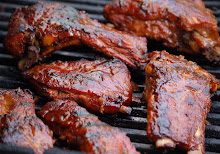
Eat Ribs in the Mountains

(...and Whistler is Awesome! according to Kip...)

I don’t know what it is but barbeque ribs just taste better after mountain biking in summer or skiing in winter. Maybe it helps justify eating decadent foods, but the vigor of the high mountain outdoors draws out the carnivore side of this omnivore.

In Vermont, we love to eat at the Back Behind Saloon, a smoke house just south of Killington (peak elevation 4,215 ft.) that serves the most awesome smoked beef short ribs I have ever had. When living in Ft. Collins, Colorado (elevation 5,003 ft. and BTW full of Mexican – not BBQ – restaurants) my grad school buddies and I would sometimes spend a week hiking the Collegiate range (elvation14,000+ ft.) near Crested Butte. To get closer and even a bit more altitude-acclimated, we’d spend the night before at just under 10,000 ft. at an old inn at Fairplay (elevation 9,953 ft.) – and eat BBQ pulled pork.

Here in Whistler, British Columbia (village elevation 2,295ft; summit elevation 7,087 ft.) they were just finishing the Canadian BBQ Championship as we arrived, full-face biking helmets and body armor in tow.

It seems they too understand this liaison between mountains and BBQ.

So when we hit the local IGA to outfit our kitchen for the week, ribs were on the list. Though fairly well outfitted, our condo kitchen didn’t have all the gadgets (or pantry supplies!) I’ve collected at home, so I had to keep it simple. While sipping some Sleeman’s Cream Ale – an old Canadian favorite of mine when we lived in Toronto (city centre elevation 253 ft; CN Tower, another 1,815 ft.) – I knew just what to do to make great, simple ribs to end a day of extreme downhill-mountain biking.


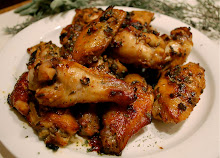
Whistler Sleeman’s Spare Ribs
2 meaty racks pork spare ribs, cut into 3-4 rib portions
1 onion, finely diced
2 Tbsp Balsamic vinegar
1 bottle Canadian Sleeman’s Cream Ale
2 cups barbeque sauce

Hit a large pot on high heat with some canola oil. Sear the ribs in batches to brown each side very well. Set ribs side.

Fry onions in the same pot for about 10 minutes, or until they soften and begin to brown. Return ribs to pot and add the beer and vinegar. Salt and pepper to taste. Cover the pot and cook the ribs for about half an hour, turning two to three times.

Remove ribs to a wide baking pan, spreading them in a single layer. Bake for about 20 minutes in the oven dialed in at 350F. Meanwhile, reduce the remaining liquid in the pot to about a cup, so it is thick and bubbly, and mix with the barbeque sauce.

Pour sauce over ribs and continue cooking another 20 minutes. Flip ribs, baste and finish for another 20 minutes in the oven.

Sunday, July 27, 2008

There’s more than one way to curry a lamb

We made curries for Bill and Whitney’s wedding shower at work last week, and sent them off with presents and all our best wishes. I love lamb curries so it was hard for me to decide which one to make; here are a few examples of how lamb blends with curry flavoring so well. The Saag Gosht I made – curried lamb with spinach – seemed a crowd pleaser, and went well with basmati rice, raita – cold, spiced yogurt sauce, and dhal – curried lentils. My colleague also made a great chicken curry, saffron rice and the dhal. Try any of these lamb curries with rice, dhal and raita.


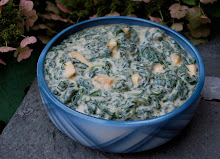
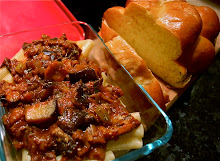
Saag Gosht
Curried Lamb with Spinach

2 lb boneless leg of lamb, cubed
2 10-oz packages fresh spinach
2 onions, diced
2 ripe fresh tomatoes, diced and drained, reserve juices
2 cloves garlic, minced
½ piece fresh ginger, minced
2 tsp. curry powder
2 tsp. Garam Masala
1 tsp. cumin seeds
2 sticks cinnamon
½ tsp. crushed red pepper flakes (or to taste)
½ cup water

In a large stew pot, sauté lamb in batches, in a bit of canola oil over very high heat. Set lamb aside in a bowl. Meanwhile, steam the spinach in a bit of water. Drain very well (I roll it in a tea towel and squeeze), and chop finely.

Add a bit of canola oil to stew pot. Fry the onion until softened, beginning to turn golden, and very fragrant, about 10 minutes. Add the garlic and ginger and continue frying for another minute or two, with stirring. Add the curry powder, Garam Masala and cumin seeds and cook with stirring until fragrant. Set the onion mixture aside with the lamb.

Turn heat to high and add a bit of canola oil to pot. Sear the tomatoes until most of the liquid has evaporated and the tomatoes begin to caramelize a bit. Return the onion and lamb mixture to the pot, add the cinnamon sticks, red pepper and the water, and simmer for an hour, stirring from time to time. Salt to taste. Add more water if necessary to form a nice sauce. Serve with rice. Serves 6-8.


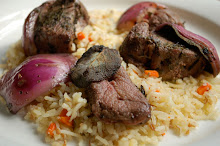
Curried Lamb Marinated With Mint, Lemon and Pineapple Yogurt, Skewered with Basil

If you can't find pineapple yogurt (can be hard to find) just mix up some canned pineapple with plain yogurt - you can skewer the remaining pineapple with the lamb as well.

Marinade:
1 8-oz container pineapple low fat yogurt
zest and juice of ½ lemon
palmful fresh (or 2 tsp dried) mint leaves, minced
2 cloves garlic, pressed through garlic press
½ tsp. red pepper flakes
1 tsp Korma Masala (below)
1 tsp salt

2 lb. boneless leg of lamb, cubed
about 3 dozen fresh basil leaves
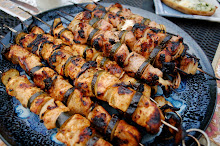
Mix together the marinade ingredients and marinate the meat overnight. Thread the meat onto skewers alternating with basil leaves. Grill for about 10 minutes, or until lamb is cooked through, turning regularly.


Shahi Korma
Creamy Indian Lamb with Almonds

This creamy Indian lamb dish with almonds is made aromatic with cinnamon sticks and a sweet masala (ground spice mix) made with coriander, fenugreek and ginger – it is much more mild and fruity than traditional ‘curry powder’. I use an electric coffee grinder dedicated to grinding aromatic spices. The almond paste helps to make a creamy sauce. The longer this dish simmers, the more tender the lamb becomes.

2 lb. boneless leg of lamb, cubed
2 large onions, diced
1 Tbsp Korma Masala (below)
2 sticks cinnamon
1 cup coconut milk
1 cup water
1/2 cup light sour cream
1/2 cup yogurt

Almond paste:
8 cloves garlic
1-inch piece fresh ginger
1/2 cup blanched slivered almonds
1/2 cup water

Blend together the almonds in a food processor until granular. Add the garlic, ginger and water and continue processing until the paste is very smooth.

In a large stew pot, heat a bit of canola oil and sear the lamb in three to four batches over high heat with regular stirring. Make each batch small enough so that pieces are not crowded enough to touch each other. Salt the lamb while searing, and remove each batch to a bowl.
Add a bit more oil if necessary, and fry the onion over medium heat for about five minutes. Add the masala spice mix and the cinnamon. Continue frying about another five minutes. Remove the onions to the meat and add the almond paste. Cook over medium heat for about five minutes, with regular stirring. Return meat and onions to pot and add coconut milk and water. Stir and simmer for at least 1 hour or more, until lamb is very tender. Stir occasionally.

Right before serving, stir in the sour cream and yogurt. Keep warm, but do not boil after this point as it can cause the yogurt to separate. Serves 6-8.


Korma Masala

This is a sweet Indian spice mix (masala), much more mild than traditional ‘curry powder’.

3 cardamom cloves
1 Tbsp coriander seeds
2 Tbsp fenugreek seeds
1 tsp ground ginger
1/2 tsp. red pepper flakes

Grind all spices together in an electric coffee grinder dedicated to spice grinding.


Basmati Pullao
Spiced Indian Rice

1½ cup Indian Basmati rice
1 Tbsp canola oil
6 cardamom pods
½ tsp cumin seeds
½ tsp mustard seeds
1 bay leaf
3 cups water
1 tsp salt

Rinse the rice in water at least 3-4 times, until the water remains clear. Drain very, very well. Sauté rice in oil, stirring constantly for about 8-10 minutes, until the rice is aromatic and turns from translucent to white. Add the spices after about five minutes. Do not brown or burn the rice or you should start over).

Add the water, salt and bay leaf, and bring to a boil. Stir and lower the heat to a simmer. Cover and cook for about 20 minutes or until the rice has absorbed all the water. Fluff with a fork.


Dhal
Creamy Indian Lentils

1 cup small red Indian lentils (Masoor Malka)
2 cups water
1 Tbsp. canola oil
1 tsp cumin seeds
1 tsp mustard seeds
1 tsp Korma Masala (above)
2 cloves garlic, minced
½ inch fresh ginger, minced
1 tsp salt

Bring the water to a boil in a medium pot and add the lentils. Cook about 20-25 minutes, stirring occasionally.

Meanwhile, heat oil in a small pan and fry the cumin and mustard seeds for 1-2 minutes, just until they become aromatic. Add the garlic and ginger and cook another minute or two until the garlic and ginger have softened.

Stir together the lentils, spices and the salt. Adjust water if necessary to make a creamy side dish.


Raita
Cold spiced yogurt sauce

I like to drain my yogurt through a coffee filter to remove a good portion of the whey – it makes the raita much richer.

2 cups yogurt
3 inches English cucumber, finely diced
1 clove garlic, pressed through garlic press
½ tsp red pepper flakes
palmful fresh mint leaves, minced, or 2 tsp dried mint
pinch of salt

Mix all ingredients together and allow to marinate overnight.

Saturday, July 12, 2008

Go Beyond Green - Cold Salads for Summer

I won’t say how to make a green salad – there’s really no recipe for that. So the only tip I’ll give is to try mixing fruits with veggies in a green salad – I love grapes, strawberries or blueberries in my salads mixed with snow peas, roasted beets or artichoke hearts – whatever.
Summer mix green salad with grapes and grape tomatoes.

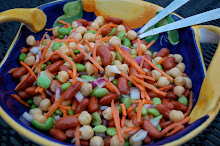
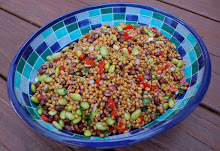
But cold salads go beyond greens – and summer is a great time to try them. I love grains and legumes, and I put together these cold whole grain salads for summer dinners, more as complete meals than accompaniments. The whole grain wheat berries, barley, lentils and beans give a resistant, al-dente feel to the teeth, and a complete balanced protein complement – especially if eaten with cheese or other diary product.

A common factor in many of these salads is the herb-vinaigrette ‘slush’. Citrus – juice and zest – infused with herbs in olive oil guarantee a fresh dressing. You could use dried herbs (in the winter, for example) but try to get fresh herbs. Use different citrus fruit (including grapefruit – stay tuned) and most any fresh herbs you have in your garden. Just be careful of rosemary, which can be fairly intense for a fresh summer cold salad.

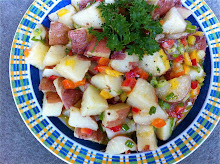
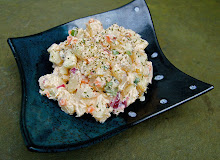
I also include a potato and apple salad, which I love – again adding fruit and crunch to a savory salad.

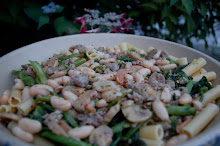
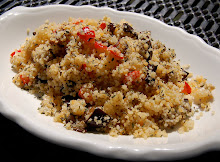
Israeli Couscous Primavera
2 cups Israeli couscous
10 oz. white button mushrooms quartered
4-inches English cucumber diced
1 small yellow squash, diced
1 jar marinated artichokes, drained and halved
12 grape tomatoes, halved
½ cup vinaigrette (or Italian) dressing

Cook couscous in plenty of boiling, salted water until al-dente – about 6-8 minutes. Drain rinse briefly with cold water to cool. Toss with remaining ingredients and chill.


Wheat Berry and Lentil Salad
1 cup wheat berries, soaked overnight if you can
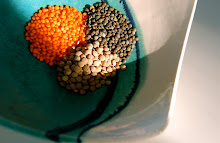
½ cup small Puy (black/olive) lentils – see 2-25-08
1 cup grape tomatoes, sliced or 1 large tomato, diced and drained
1 green onion, sliced
Juice and zest of 1 lemon
¼ cup olive oil
½ tsp coriander powder
Palmful fresh parsley, minced
1 Tbsp fresh mint, minced
1 clove garlic, pressed through garlic press

Cook wheat in salted water until al-dente. I like to use a pressure cooker – about 30 minutes, compared to about 60 minutes in an un-pressurized pot. A pressure cooker not only saves energy but keeps the kitchen cooler on hot summer days. Drain wheat and allow to cool.

Cook lentils in non-salted water for about 20 minutes, and then add a teaspoon of salt. Continue cooking about another 5 minutes, being careful not to overcook, or the lentils will fall apart. Taste-test often. Brain and let cool.

Mix remaining ingredients together and then gently fold in the drain wheat and lentils. Salt and pepper to taste. Allow to marinate at least half an hour.


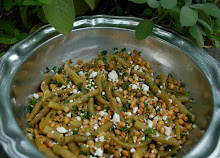
Bean and Barley Salad
1 can garbanzo beans, drained
1 can Navy beans, drained
1/3 cup pearl barley
¼ cup olive oil
Juice and zest of 1 lemon
Palmful parsley, minced
1 green onion, chopped
1 clove garlic, pressed in garlic press
½ orange pepper, finely diced
1 Tbsp white wine vinegar

Cook barley in 3 cups salted water for about 15-20 minutes, just until the barley is al-dente. Drain and let cool.

Mix together all ingredients and marinate at least half an hour.


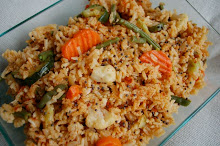
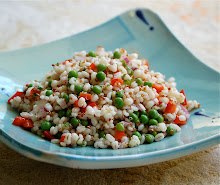
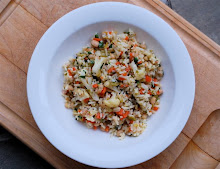
Brown Rice and Edamame Salad
1 cup short-grain brown rice
1½ cup frozen, shelled Edamame (green soybean)
1 carrot, coarsely grated
1 green onion, chopped
1 Tbsp sesame oil
1 Tbsp soy sauce
2 Tbsp olive oil
Juice and zest of ½ lime
1 clove garlic, pressed through garlic press
½-inch fresh ginger, finely minced
1 Tbsp sesame seeds

Cook rice with two cups water and 1 tsp. salt for about 20 minutes. Fluff and tip out onto a platter to cool down.

Meanwhile, cook Edamame in salted water for about 5-10 minutes until tender to your liking. Drain and cool.

Mix together all the remaining ingredients and fold in the rice and Edamame. Sprinkle with sesame seeds. Allow to marinate at least half an hour.

Monday, June 30, 2008

OK, so you can’t BBQ every day. Bummer.

Nitrosamines aside, you might want something a bit lighter on a steamy summer day, besides food grilled on a BBQ. So consider steaming. It’s clean, light and fresh tasting. Feels cooler on a hot summer day, especially if you let what you steamed temper towards room temperature before eating.

Fish and chicken breast are especially good for steaming. A little cool sauce on the side and a fresh salad, and I don’t know – maybe it’s as good as BBQ.

Heresy! Some may say. You decide. Just put a few veggies and citrus alongside what you steam so everything cooks in one pot. Get a good steaming unit – either a pasta cooker/veggie steaming unit, a bamboo steamer accessory for a wok or just one of those nifty folding steaming baskets. And go wild.

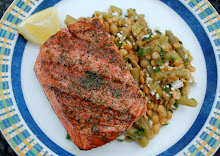
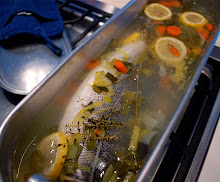
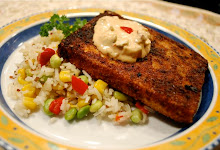
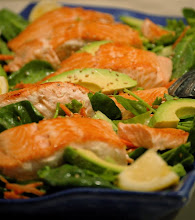
Ginger-Steamed Salmon with Lemon, Onion and Baby Spinach
1½ lb fresh salmon, cut into individual serving portions
½ lemon, thinly sliced
about ½ cup Bermuda onion, thinly sliced into half-moons
1 tsp fresh ginger, minced
1 10-oz bag baby spinach

Bring 2-3 cups of water to a boil in the base of a steamer. On counter top, place fish in removable steaming element. Top with lemon slices, and scatter onion and ginger around salmon. Place in steamer.

Cover and steam for 7 minutes. Then scatter spinach leaves about the salmon, mostly around the circumference of the steamer. Salt and pepper to taste. Cover and steam another 3 minutes, until the spinach leaves just wilt.

Serve with tartar sauce. Serves four.


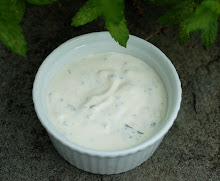
Tartar Sauce with Sundried Tomato Pesto

1 rounded Tbsp India relish
2 Tbsp real mayonnaise
2 Tbsp light sour cream
2 tsp. sundried tomato pesto
1 clove garlic, pressed
1 tsp dried dill weed
dash salt
dash cayenne pepper

Whisk together all ingredients.


Cucumber, Tomato and Bermuda Onion Salad
6-inches of English cucumber, diced
1 large ripe fresh tomato, diced
about ¼ cup Bermuda onion, cut into half-moons
1 Tbsp real mayonnaise
1 Tbsp light sour cream
1 tsp. dill
2 Tbsp vinaigrette dressing (6-22-08)
salt and pepper to taste

Mix together all ingredients and allow to meld for at least 30 minutes, turning once in a while.

Sunday, June 29, 2008

To Grill is Human

The smell of barbeque by the side of a gorgeous reservoir bordered by fragrant pines in the Green Mountains of Vermont is a summer childhood memory that will never leave me. We’d pile into our station wagon and debate which lakeside spot was best for folding down our tailgate. We made our fire in standard-issue metal State Park grills using native wood to start our charcoal. It took forever. Us kids swam and generally messed around while Dad grilled – we’d get wafts of the barbeque randomly interspersed with pine and lake – you don’t forget that.

I wonder – did Neanderthals hold fond memories of grilling cave-side?

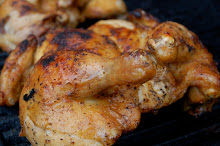
Today, grilling has almost become a science, and that’s not a bad thing. With so many more choices and devices available, grilling is easier (and you could say healthier) than it was for our parents, and I’d say we do it much more often. Of course, choice invites controversy and potentially stress: benefits and limitations of gas vs. charcoal; which charcoal type is better; cedar plank or direct heat for salmon; or whether the outdoor electric grill (or indoor grill pan) can actually be considered grilling devices. Think debating professional sports.

It may be more complex now, but us gear geeks think it's more fun.

But look, don’t stress out. Nothing is stopping you from simply going lake-side with some wood and charcoal and a few pieces of chicken, and folding down your tail gate (of your SUV, that is).


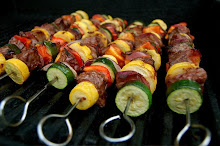
I think shish kebab is one of the least stressful things to grill, and one of the most appealing. You can use almost any meat, fowl or seafood, with almost any vegetable and basting sauce. You really can’t go wrong. How stressful is that?!

Beef Kebabs with a Honey-mustard and Onion Baste
2 lb beef sirloin, cut into 1-inch cubes
2 small zucchini, sliced about ¼-inch
2 small yellow summer squash, sliced about ¼-inch
1 purple onion, cut into wedges
1 large red pepper, cut into 1-inch pieces

basting sauce:
1 small onion, finely diced
¼ cup Dijon mustard
¼ cup honey
¼ cup olive oil
juice and jest of 1 lemon
1 tsp dried tarragon (or other herb of choice)
dash salt and pepper to taste
enough white wine (about 1 Tbsp) to make a creamy basting sauce

marinade:
1 cup red wine
2 Tbsp red wine vinegar
¼ cup canola oil
1 tsp fresh oregano (or other herb of choice)
1 onion, finely diced
2 cloves garlic, minced
1 tsp cumin seeds
1 tsp sugar

Mix together marinade and pour into a zip-lock plastic bag. Marinate meat for up to a day or as long as you can, at least an hour. Whisk together basting sauce ingredients.

Drain meat and discard marinade. Skewer meat and vegetables in an alternating pattern. If you use wooden skewers, be sure to soak them in water for half an hour so they don’t burn.

Grill shish kebabs over medium grill for about 10 minutes, turning every 2-3 minutes. Salt and pepper to taste. Then start basting liberally with honey mustard baste, turning the skewers often, until the vegetables soften and the meat is cooked through to desired doneness. Serves six.


Tarragon Grilled Swordfish Kebobs with Black Bean Salsa
2 lbs swordfish (enough to make 24 1-inch cubes)
1/2 large red pepper cut into 12 1-inch pieces
1/2 large green pepper cut into 12 1-inch pieces

basting sauce:
½ cup mayonnaise
¼ cup vinaigrette dressing (June 22, 2008)
enough white wine (about 1 Tbsp) to make a creamy basting sauce
1 tsp dried tarragon
1 tsp dried dill
¼ tsp red pepper flakes
salt to taste

Black bean salsa:
1 can black beans, rinsed and drained
1 large fresh tomato, diced
palmful of fresh cilantro (or parsley)
2 cloves garlic, pressed
2 green onions, finely chopped
juice and zest of 1 lemon
2 Tbsp cider vinegar
½ tsp. salt
¼ tsp ground cumin
¼ tsp. ground black pepper
1 tsp. brown sugar

Whisk together the basting sauce and set aside. Mix together the salsa ingredients and marinate in the refrigerator at least half an hour.

Alternate the swordfish and peppers on skewers. If using wooden skewers, be sure to soak them in water for half an hour so they don’t burn.

Grill for a total of about 10 minutes, turning and basting often. Serve garnished with salsa. Serves six.


Lamb With Mint and Pineapple Yogurt, Skewered with Basil
2 lb boneless lamb, cut into 1-inch cubes
20 fresh basil leaves

Marinade:
1 8-oz container pineapple low fat yogurt
juice and zest of ½ lemon
1 tsp dried mint leaves, or 1 Tbsp fresh leaves, minced
2 cloves garlic, pressed
½ tsp red pepper flakes
1 tsp salt
fresh ground pepper

Mix together the marinade and marinate the meat for at least an hour or overnight if possible.

Alternate the lamb and basil leaves on skewers. If using wooden skewers, be sure to soak them in water for half an hour so they don’t burn.

Grill for about 10 minutes, or until meat is cooked to desired doneness, turning often. Serves six.


Our friend Cindy first taught me the basics of the teriyaki marinade – you can use it for meat, fish, fowl or even tofu. You can make many variations on the teriyaki theme – citrus goes especially well.

Grilled Salmon with a Maple Orange Teriyaki Marinade
1½ lb salmon filet

Marinade:
¼ cup soy sauce
¼ cup real maple syrup
1 tsp sesame oil
juice and zest of 1 orange
2 Tbsp chives, minced
2 cloves garlic, pressed
½ inch fresh ginger, minced
¼ tsp red pepper flakes

Whisk together the marinade ingredients. Marinate the salmon for 30-60 minutes. Grill on a well-oiled (use spray oil – carefully) hot grill, flesh side down. Place the salmon on the hot grill and don’t touch it for five minutes.

Walk away from the grill and no salmon will get hurt.

Touch it and it will fall apart – don’t do it!

After five minutes, the salmon will have formed a firm glossy surface where it contacts the grill. With a slim spatula, flip salmon and grill for about another 5 minutes, depending on the thickness. The rule of thumb is 10 minutes per inch of thickness. Remove to serving platter. Serves four.

Excellent served over sautéed spinach.


Sautéed Spinach
2 shallots, finely diced
1 tsp sugar
2 cloves garlic, halved and thinly sliced
¼ inch piece fresh ginger, minced
10 oz. fresh baby spinach
juice of ¼ lemon

In a large skillet, sauté shallots in a bit of olive oil and the sugar until beginning to caramelize, about 10 minutes. Add the ginger and garlic and cook another 3-4 minutes. Toss in the spinach and squeeze in the lemon juice. Toss until the spinach is just wilted. Salt and pepper to taste.


I have finally mastered the art of grilling pork tenderloin. This is one of my favorite cuts of pork, but when the edges were done to perfection I was always left with a near-raw center when grilling the whole loin. I now simply cut the whole tenderloin in half, and I use a slim digital thermometer inserted just to the center of one of the halves. I grill, turning a few times, until the center registers 140F. Then I let it sit on a cutting board, covered with aluminum foil for about 10 minutes. The temperature usually rises about 5-8 degrees, resulting in a nice juicy medium rare center.

Grilled Pork Tenderloin with Apple, Mint and Tomato Compote
2 trimmed pork tenderloins, cut in half

compote:
1 onion, finely diced
1 tsp cumin seeds
1 tsp dried mint
1 can diced tomatoes and jalapenos, drained
1 tsp sugar
1 cup apple sauce
½ cup white wine

Prepare the compote by sautéing the onion in a bit of olive oil for about 10 minutes, or until the onion is very softened and a bit caramelized. Add the cumin seeds and mint after about 8 minutes, to bring out their flavor by cooking in the hot oil. Raise the heat and add the tomatoes and sugar. Cook for about 5 minutes, stirring often, so the tomatoes sizzle and also caramelize a bit. Add the applesauce and wine and simmer while you grill the pork.

Insert a digital thermometer into the center of one of the tenderloin halves. Salt and pepper to taste. Grill the pork until the center registers 140F or until it is done to your taste. Remember the pork will cook about 5-10 degrees more on standing covered with aluminum foil on a cutting board.

After allowing the pork to rest 10 minutes, slice the tenderloin on a bias and serve with the tomato compote. Garnish with fresh mint if you like. Serves six.

Sunday, June 22, 2008

Israeli Couscous

I work with engineers so I appreciate the old adage “Don’t reinvent the wheel!”, but I am totally OK with reverse engineering a great idea.

Recently I hosted a lunch meeting with several engineers and our cafeteria brought up a fantastic Israeli couscous salad – it was so good I had to reverse engineer it!

Israeli couscous (also known as pearl couscous), a larger cousin of the finer Arabian couscous, is more like a tiny pasta. So it is great for cold salads.

I also include below a side-dish recipe I prepared for my busy sister in law, Babette. I combined all the dry ingredients into a small zip-lock bag so she only had to add it to some boiling water, stir, cover and get back to work. Makes for a great gift.

Israeli Couscous Primavera
2 cups Israeli couscous10 oz. white button mushrooms quartered
4-inches English cucumber diced
1 small yellow squash, diced
1 jar marinated artichokes, drained and halved
12 grape tomatoes, halved
1 clove garlic, pressed
½ cup vinaigrette (or Italian) dressing (see below)

Cook couscous in boiling salted water for about 8-10 minutes or until just tender. Drain well. Mix with remaining ingredients and chill. Sprinkle with parsley or chives. Makes a large bowl – enough for about 8 as a side dish.


Vinaigrette Dressing
¼ cup cider or red wine vinegar
1 tsp salt
1 tsp ground black pepper
1 clove garlic minced, or 1 tsp garlic powder
1 tsp dried dill weed
1 rounded Tbsp Dijon mustard
¾ cup canola or olive oil, or a mix of the two

Whisk together the first five ingredients until the salt dissolves. Whisk in the remaining ingredients.


Israeli Couscous and Orzo Pilaf
¾ cup Israeli couscous
¼ cup tricolor orzo
1 Tbsp. whole grain red quinoa
1 tsp. garlic powder
1 tsp onion powder
1 tsp salt
½ tsp. turmeric
2 cups chicken broth
1 Tbsp. olive oil

Bring broth to boil. Add remaining ingredients and simmer about 10 minutes. Serves four.

Can make a great make-ahead mix. Whole grain red quinoa is available in whole food stores.


Monday, May 26, 2008

Spices are for lovers

They say many spices used in Indian cooking are aphrodisiacs. I don’t know, but there certainly is something about them I can’t stay away from.

Give me cauliflower, and I’ll give you Aloo Gobhi. Cauliflower, potatoes and tomatoes – good basics, but a bit bland. Add cumin, garlic, ginger and some curry powder and – now you have something special.
Great as a side dish – or as a base for a frittata. My wife absolutely loved it. Make it and who knows – you might get kissed!

Aloo Gobhi
[Indian cauliflower and potatoes]

2 new white potatoes, peeled and diced ½-inch
1 small head cauliflower, (~3 cups) broken into small pieces
2 dozen grape tomatoes, halved lengthwise
2 cloves garlic, minced
¼-inch fresh ginger, minced
½ tsp. cumin seeds
¼ tsp red pepper flakes (or to taste)
1 Tbsp. sundried tomatoes
1 tsp. curry powder
about ½ cup water

Bring potatoes to a boil in enough water to cover. Gently cook just until soft – about 8-10 minutes. Drain, and set aside.

Meanwhile, bring salted water to a boil in a pot. Blanch cauliflower in water for about a minute, drain and set aside.

Meanwhile, is a large non-stick skillet, sauté the ginger, garlic, pepper flakes and cumin in a bit of olive oil, for about 2-3 minutes. Add the tomatoes and cook another 3-4 minutes. Add the cauliflower, potatoes and cumin, and sauté for another 5-10 minutes, adding water if it gets too dry.

Sunday, May 18, 2008

Fragrant Tagines for Springtime

Now that it’s spring, the apple blossoms, dogwoods and lilacs are out and fragrant. An aromatic tagine of spiced lamb or chicken resonates with spring.

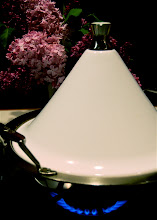
Tagines are clever dishes from Northern Africa with a conical lid, used to prepare tender stews. They accomplish this better than many pots, because the conical shape of the lid allows steam to reflux (a chemist’s term for condensing and dripping back down) and cycle moisture back into the stew.

Meat, dried fruits and nuts are common ingredients for Moroccan tagines. Here are two examples.


Lamb Tagine with Sundried Fruit and Almonds

1 onion, diced
3 cloves garlic, minced
1 inch piece ginger, minced
½ tsp. cumin seeds
¼ tsp red pepper flakes
2.5-3 lb. lamb, cut into 1-inch pieces
2 cinnamon sticks
2 cups water
1 cup dried prunes
½ cup dried apricots
¼ cup dried blueberries
½ cup blanched whole almonds

Sauté onion in a bit of olive oil until softened. Use your tagine if it is stove-top compatible – otherwise use a separate fry pan. Add garlic, ginger, cumin seeds and pepper flakes, and cook another few minutes until fragrant. Set aside in a bowl. Add a bit of oil to tagine (or pan) and turn heat to high. Sauté lamb in batches if necessary, to brown all sides. Salt and pepper to taste.

Toss lamb and onion mixture with water in tagine. Distribute cinnamon sticks in mixture. Cover, and simmer on low heat for at least an hour. Then, add dried fruit, mix and simmer another half hour.

Meanwhile, toast almonds in a bit of canola oil in a pan for a few minutes, just until fragrant. Top tagine with almonds.


Chicken Tagine with Dates and Roasted Butternut Squash

1 small butternut squash, peeled, cored and diced to ½ inch
½ tsp nutmeg (preferably from fresh whole clove)
1 onion, diced
3 cloves garlic
1 inch fresh ginger, minced
½ tsp. cumin seeds
¼ tsp red pepper flakes
6 skinless chicken thighs
2 cinnamon sticks
1 cup water
1 cup dried dates, coarsely chopped

Preheat oven to 450C. Toss butternut squash with nutmeg, about a tablespoon of olive oil, and a dash of salt and pepper. Distribute evenly onto a jellyroll pan. Roast for about 20 minutes, turning 2-3 times, to brown the squash. Let squash cool in pan.

Meanwhile, sauté onion in a bit of olive oil until softened. Use your tagine if it is stove-top compatible – otherwise use a separate fry pan. Add garlic, ginger, cumin seeds and pepper flakes, and cook another few minutes until fragrant. Set aside in a bowl. Add a bit of oil to tagine (or pan) and turn heat to high. Sauté chicken thighs, browning all sides. Salt and pepper to taste.

Toss chicken together with onion mixture and water in tagine. Distribute cinnamon sticks in mixture. Cover, and simmer on low heat for at least a half hour. Then fold in dates and squash, and simmer another 20-30 minutes.

Wednesday, May 7, 2008

Eat Fish (in Brittany, if you can)


Arriving in Brittany from Paris for a few days R&R, I found my cousin Christine had placed a history of Block Island on her guest room nightstand. We share a passion for a fantastic island.

She showed me her favorite corners of Brittany’s coastline, and I understood more clearly why my father always said the Southern New England and New York coastline in many ways reminded him of Brittany. Except the tides!

I have a classic T-shirt from Block Island on the front of which is written “Eat Fish”. In Brittany, I really understood that imperative. In the four days I visited, I ate ONLY FISH.

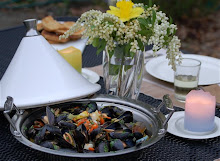
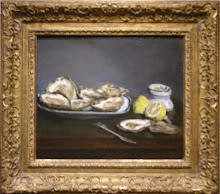
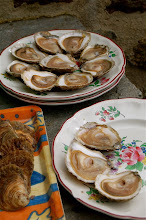
Shellfish of Brittany are especially unique – the Boulot snails in decorative coiled shells; huitres de Cancale – a unique flat and especially mild oyster my mother always told me about; Langoustines – a cross between a crayfish and a lobster; and the most tender, rich and rare Abalone you can find. Daniel is an expert at opening les huitres – watch out, a difficult job!

Besides shellfish, I enjoyed Dourade, Sole (twice!) and a great souppe de poisson. Not to mention the cheese, bread and wine! With the help of Christine’s husband Daniel, we scoured the markets and chose restaurants to sample the best of the locale of their village of St. Briac in Brittany.

Three tagines from Morocco about the cupboards were a hint that Christine knows her way around the kitchen (and the world), and is not afraid to experiment. These recipes of the open-air market ‘poissonieres’ fish mongers, of Christine, and of myself inspired from a great visit, demonstrate the essence of simplicity (and speed!) of seafood, and how seafood can also provide a foundation for stronger, more robust flavor motifs.

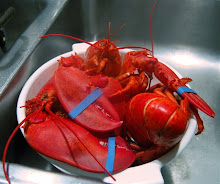
Langoustines Christine
2 kg fresh langoustines
1 bay leaf
500 mL water (about a quart)

Bring the water and bay leaf to a boil in a large pot. Add the langoustines and steam for about 10 minutes. Drain and cool to room temperature in the shade.

This is the ultimate in simplicity – serve as is (we did), eating with your fingers ‘sur l’herbe’, or with lemon or with any variety of tartar dipping sauces.


Boulots Bretagne
6-8 Boulot snails per person for appetizers
Water to cover

Bring water to a boil in a pot. Drop snails in water and boil gently fr 15 minutes. Set pot aside and allow water and snails to cool together in the pot. Drain snails and serve with a sharp metal or wood toothpick.

Again this is the ultimate in simplicity – serve as is (we did), eating with your fingers ‘sur l’herbe’, or with lemon or with any variety of tartar dipping sauces.


Sole au Poile (Panfried Sole)

4 sole, skin removed (fillets are fine as well)
2 Tbsp. butter
2 Tbsp. flour

Scatter flour in a plate and turn sole in the flour to coat gently. Meanwhile melt butter until bubbling in a wide non-stick skillet and tip sole into pan. Sauté for about 2-3 minutes over medium-high heat, until first side is browned. Salt and pepper to taste.

Flip fish and cook on second side about 2-3 minutes. Serve with lemon.

Sunday, April 13, 2008

Real Men Eat Frittatas

I have a colleague who is fit as a fiddle and eats 12 eggs a week. No kidding. His cholesterol is spot-on and he’s convinced too much is made about the dangers of eggs, and not enough of their value. I couldn’t agree more.

In fact, leading journals such as the Journal of the American Medical Association (JAMA) have published studies concluding that moderate consumption of eggs (6 per week) results in no observable cholesterol level increases. Remember when butter was shunned? Eat margarine, they said.

I’m not saying we should eat whatever we want. But we don’t yet fully understand the relationships between cholesterol, DNA and diet. The French do just great; stick to basics of moderation, variety and balance, and get regular exercise.

And enjoy an egg once in a while!

Omelets and their cousins, frittatas, are great ways to enjoy the wonders of eggs. But there’s considerable confusion around the omelet and the frittata – think omelet on steroids. The French lay claim to the omelet and the Italians the frittata, but I have read the Romans actually invented the omelet. Apparently it’s not Spanish because there are no double t’s in Spanish – is that right? Who knows? The Chinese invented pasta, right? Whatever.

I finish my frittatas in the oven. They can be served hot or cooled off, so they’re great for appetizers or picnics. Omelets are much more delicate and should be eaten immediately. The big thing to learn with the omelet is the folding while cooking – pulling in the cooked egg to the center and letting the runny egg fill in the empty space (see photo). Pick up the pan in one hand to roll it to let the runny egg flow. You should be making lots of delicate folds.

Of course there are zillions of variations – here are a few just to get the hang of it. After that, go wild.


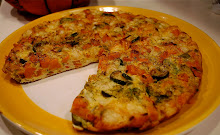
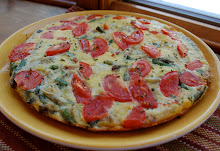
Frittata of Mushroom, Spinach and Ham

1 yellow new potato, peeled and diced ¼ inch
10-oz sliced mushrooms
12 grape tomatoes, sliced in half lengthwise
8 eggs
¼ cup half-and-half
1 pkg. frozen spinach, thawed and squeezed dry
½ cup diced ham
¼ lb. sharp cheddar cheese, grated

Cook the potato in boiling, salted water just until soft. Drain and set aside. Meanwhile, sauté mushrooms in a bit of olive oil in a large oven-going non-stick skillet until well browned. Set aside. Sear grape tomatoes over high heat in a bit of olive oil in same skillet, cut side down, just until browned. Set aside.

Preheat the broiler. Beat together the eggs and half-and-half. Salt and pepper to taste. Heat the non-stick skillet with a bit of olive oil just until smoking and pour in half the eggs. After about 30 seconds, pull the eggs in towards the center as they cook, tilting the pan to let uncooked egg run back onto the pan exposed. Do this several times as the egg begins to set, to form delicate folds with the egg.

As the eggs begin to set, scatter the mushrooms, spinach, ham and potato over the top and pour on the remaining eggs. Top with cheese and the tomatoes. Cook a few more minutes over moderate heat until the eggs set, and then place under the broiler to finish the eggs and melt the cheese.

Loosen frittata with a soft spatula and gently slide onto a platter.


Frittata of Caramelized Onion and Roasted Butternut Squash

2 cups butternut squash, peeled and diced to ¼-inch (about ½ a medium squash)
2 Tbsp. butter
2 Tbsp. olive oil
1 purple Burmuda onion, cut in half and thinly sliced
3 shallots, diced
1 tsp. sugar
8 eggs
¼ cup half-and-half
Dash freshly grated nutmeg
¼ lb. Muenster or Provolone cheese, grated
2 Tbsp. chives, minced

Preheat oven to 450F. Toss squash with enough olive oil just to coat. Salt and pepper to taste. Scatter squash onto a large jelly-roll baking pan and roast in oven for about 15 minutes, stirring once or twice, until the squash sizzles and begins to brown. Remove from oven and set aside.

Meanwhile, heat oil and butter in a large, oven-going non-stick skillet. Sauté onion, shallot and sugar for at least 10-15 minutes over medium heat, until the onions begin to caramelize. Remove onions from pan and set aside.

Preheat broiler. Beat together the eggs, half-and-half and nutmeg. Salt and pepper to taste. Heat the non-stick skillet with a bit of olive oil just until smoking and pour in half the eggs. After about 30 seconds, pull the eggs in towards the center as they cook, tilting the pan to let uncooked egg run back onto the pan exposed. Do this several times as the egg begins to set, to form delicate folds with the egg.

As the eggs begin to set, scatter the squash and onions over the top and pour on the remaining eggs. Top with cheese and the chives. Cook a few more minutes over moderate heat until the eggs set, and then place under the broiler to finish the eggs and melt the cheese.

Loosen frittata with a soft spatula and gently slide onto a platter.