About Me

My photo
Welcome to flexitarian cooking. A fusion of global flavors with lots of plants, some seafood and a bit of meat now and again.


Showing posts with label Meats. Show all posts

Tuesday, March 15, 2016

Ina’s Meatloaf with a Toasted Garlic Sauce

Meatloaf is a dish Ina Garten and I agree on - a basic comfort food all cooks should and can gain easy mastery of, and will engender great appreciation for.  No time to make the sauce?  No problem, just rub on a mix of ketchup and sriracha onto the surface of the loaf (with your clean hands) before baking and go do what you have to do as the loaf bakes away.  This is an easy mix-bake-walk away opportunity.  But if you can, do take the time, because this toasted garlic sauce really elevates this dish to a whole new level.
1 onion, finely diced
4 small celery stalks, finely diced
1 carrot, peeled and finely diced
2 cloves garlic, minced

1 lb ground beef - I used 85%
1 lb ground pork
2 eggs
1 cup Panko bread crumbs
1/2 tsp red pepper flakes
large palmful fresh parsley, minced, divided in half
1 Tbsp fresh thyme leaves, minced
1 tsp coarse kosher salt
1`/2 tsp freshly ground black pepper
1/2 cup milk

Sauce:
2 cups chicken (or beef) stock
1 rounded Tbsp corn starch plus 2 Tbsp water
1/3 stick butter at room temperature
10 cloves garlic, peeled

Preheat oven to 375F. Heat a dash of olive oil in a skillet and sauté the onions, celery and carrots for about 10-12 minutes, until beginning to brown, and well softened. Add the garlic and cook another 2-3 minutes.

In a large mixing bowl, mix the onion mixture with the remaining ingredients (only half the parsley) with your hands.
Mix very, very gently, being careful NOT to squeeze the meat together, but rather just to fold the mixture together. This ensures a light, flakey meatloaf, rather than a dense, tough meatloaf.

Form meatloaf into a uniform rectangle wither in a casserole or a greased rimmed baking sheet.
Bake about an hour, until the beef is cooked through to at least 160F in the center as read by an intent read thermometer.

While the meatloaf bakes, make the sauce. Toss the garlic in a small sauté pan with a dash of olive oil. Slowly cook the garlic over low heat, watching them and turning them often as they turn gold - but not browned. See Cook's Note.
Be careful not to burn the garlic - this is a slow patient process of about 15-20 minutes.

As the garlic cooks, bring the stock to a gentle boil in a small sauce pan. Reduce by about half - this also will take a good 15-20 minutes. Whisk in the butter. Now whisk together the cornstarch and water and then whisk into the stock oven a gentle boil. Whisk as the stock tickets. Add the garlic and the flavored oil to the stock, along with the other half of the parsley.
Set sauce aside over very low heat until the meatloaf is done.

When meatloaf is cooked, remove from the oven and cover with foil. 
Allow to stand for at least 10-15 minutes to allow the loaf to re-absorb its juices before you attempt to slice it.

Slice into 1-inch thick slices. Serve with sauce. Serves 4-6.

Cook’s Notes: Pan toasting garlic cloves is a test of patience, an attribute I am told I might not be rich in :-)) Here I think I browned the cloves just a bit too much, but they were still delicious and aromatic. Too much browning can make them bitter, so beware.

I think a rimmed baking sheet is the container of choice as it allows all surfaces of the loaf to bake evenly. I think a casserole focusses heat too much only on the top - I’d go with the rimmed sheet pan rather than the casserole.

The classic meatloaf meat mix is 1/3 ground beef, 1/3 ground pork and 1/3 ground veal. I rarely see ground veal, and am uncomfortable with how veal are raised, and don’t really believe it adds so much to this dish. So I go with 50:50 mix of pork and beef - and wow is all I can say. Your choice.

Sunday, April 5, 2015

Lamb Shanks Vin Rouge with Spring Carrots

Easter means lamb to many of us, and one of the most succulent portions of lamb is the shank.  Stewed with tomatoes and wine along with spring vegetables, you can't ask for a more appropriate dish for Easter.

1/4 lb bacon, diced
4 lamb shanks
2 bunches young carrots, with stems
1 large onion, diced
2 cloves garlic, minced
1 Tbsp rosemary, crushed
12-oz fresh mushrooms, sliced thickly
1 28-oz can crushed tomatoes
2 cups red wine

Brown the bacon in a large Dutch Oven or pot for about 5 minutes.  Remove to a bowl.  Brown the shanks in the bacon drippings for about 4-5 minutes per side.  Remove shanks to a bowl. Add onion and carrots to pot and sauté for about 8-10 minutes, to soften and slightly caramelize, adding a dash of olive oil if necessary. Add the garlic and rosemary and cook another 2-3 minutes. Salt and pepper to taste.
Remove carrots and onions to a bowl. Now turn the heat to high, add a dash more olive oil and add the mushrooms to the Dutch oven. Cook on high heat until the mushrooms release what water they will, and begin to brown up a bit.

Return the carrot mixture to the Dutch oven. Add the tomatoes and the wine and then nestle the shanks back into the pot among the vegetables. The shanks should almost be covered with liquid. Add a bit of water if necessary.

Bring dish to a boil, then reduce to a simmer. Cover and cook for about 1-1/2 hours, turning shanks at least 2-3 times with tongs. The lamb should be very tender to the tip of a sharp knife, and beginning to fall off the bone.

Serves 4.

Wednesday, October 22, 2014

Chipotle Orange Beef Stew

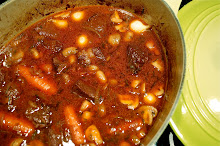
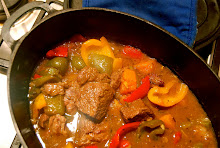
The oxtails give an unctuous smooth richness to this stew; a nice counterpoint to the edge of jalapeño and chipotle peppers.  An orange infusion lifts this stew to beyond the ordinary.
1/4 lb bacon, diced
2 lb chuck stew beef
3 oxtails

1 red pepper, diced
1 yellow pepper, diced
1 jalapeño pepper, diced
1 onion, diced

2 6-inch links fresh chorizo sausage, sliced
2 Tbsp Crushed Dried Chipotle spice
3 cloves garlic, sliced
6 fresh sage leaves, sliced

2 naval oranges
2 cups beef broth

In a large Dutch oven or pot, brown the bacon with a dash of canola oil. Remove to a large bowl when browned. Then brown the beef in two batches in a bit of canola oil over high heat. Salt and pepper generously. Allow at least 2 sides of each cube to brown up nicely, and then set aside in the bowl with the bacon. Add the oxtails to the pot and brown the first side. Flip and continue to brown the other side.

Toss in the peppers and onions while the other side browns, to keep the rest of the pot from burning, while the oxtails brown.
When the oxtails are browned, remove to bowl with beef, and continue cooking the peppers and onion, for about 10 minutes, until they are softened and begin to caramelize a bit. Remove the veggies to the bowl with the meat.
Add the chorizo to the pot with a spot more oil and brown the slices. After the first side is browned, add the chipotle, garlic and sage and continue browning the other side.
Zest the oranges and reserve in the refrigerator, covered. Then juice the oranges.

Return the meat and veggies to the Dutch oven and stir well.
Add the orange juice and the broth. Check the liquid level; it should be just above the meat. Bring to a boil, stir, reduce heat to a simmer. Cover and cook for about 1-1/2 hours, stirring every once in a while.

When the beef is fork tender, remove the oxtails and allow to cool off a bit. Work the meat off the bones and return to the stew. Stir to mix well.

Serve topped with the orange jest, along with tortillas, avocados and limes.
Serves 6.

Cook's note:  I used dried chipotle seasoning rather than chipotle peppers in adobo sauce.  I don't use enough chipotle peppers to open a whole can, and I find that the chipotle seasoning works very well indeed.  I'm sure you could use the canned peppers - I'd guess 1-2 according to your taste.

Thursday, August 21, 2014

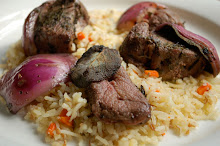
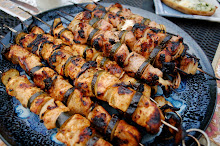
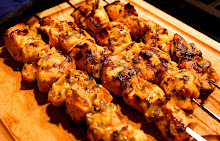
Moroccan Lamb Kebab Harissa

This is a great meal for guests.  You can get everything ready in advance - including a crispy cole slaw as a side.  Right before dinner, you just grill over very high heat for a very short time.  Lamb is best medium rare or rare, in my opinion.  Don't neglect your guests and overcook these beautiful puppies.
2 lb boneless lamb, leg or shoulder, cut into 1-inch pieces - you should have about 30 pieces

Marinade:2 tsp cumin seeds
2 tsp fennel seeds
2 tsp coriander seeds
1 tsp powdered sumac (see Cook’s Note)
1 tsp salt
1 Tbsp Harissa, Moroccan chili paste
4 cloves garlic, minced
palmful fresh thyme, leaves largely pulled from twigs
1/2 cup olive oil
juice of 1 lemon

Well before eating:
Toast the seeds in a dry skillet for about 2-3 minutes until they become fragrant. Remove from heat and cool. Coarsely grind in a coffee mill dedicated for spice grinding (or accept your next pot of coffee to be slightly spiced up - which is actually very, very good!)

Toss ground seeds into a large bowl with remaining marinade ingredients.
Mix together. Add the lamb cubes and toss together well.
Wrap with plastic wrap and allow to marinate in the refrigerator at least a few hours, if not, overnight.

Getting ready to eat:
Heat a grill. Thread the meat onto skewers.
Grill the kebabs on high heat for 2-3 minutes each side.
Reduce heat slightly and cook until medium rare, another minute or two.

Serves 6-8.

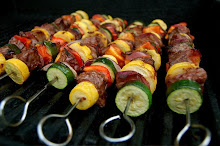
Cook’s Note: You can also skewer with veggies and other savories. Here I added a smoked Andouille sausage and lots of veggies.


Sumac is a spice used extensively in the Mediterranean to enhance dishes such as grilled meats and hummus. It is the powder formed by grinding the flower of the Rhus-species plant. Not to be confused with distant poisonous relatives such as poison sumac (which has a white flower), and poison ivy. God knows if there were a poison ivy relationship, I would not have been around to tell you about it!

It has a sour, rich flavor that goes well with deep flavors such as lamb.

I find powdered sumac at specialty spice stores, such as Spices and Tease in Chelsea Market, off the Highline Park in NYC.

Saturday, August 16, 2014

Pattypan Squash Stuffed with Lamb Apricots and Almonds

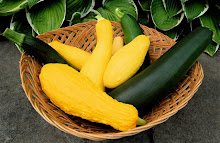
Our CSA is giving us beautiful pattypan squash this summer, and I see them in farmer's markets more and more.  After scooping out a few seeds, you are left with tender, meaty summer squash, just a bit more firm that a zucchini, and so stuff-able! Flavored a bit on the Meditteranean side, this dish is rich with sage, apricot and almond flavors which complement the Harissa-spiced lamb.
3 pattypan squash
2 dozen sage leaves
2 Tbsp butter and 2 Tbsp olive oil
3 cloves garlic, sliced

1 onion, sliced
1 lb ground lamb
2 tsp cumin seeds
generous salt and fresh ground pepper
2 Tbsp Harissa, Moroccan hot pepper sauce (or other hot sauce)
1/2 cup dried apricots, finely diced
1/3 cup slivered almonds (2 Tbsp reserved)
palmful fresh mint, chopped

Preheat oven to 375F. Halve the squash at the stem and then scoop out the seeds with a soupspoon. Arrange the pattypan squash halves in an oiled casserole.

Melt the butter with the oil. Add the sage leaves and garlic and cook for about 2 minutes, just until the sage starts to crisp up a bit and the garlic becomes fragrant.
Pour the sage butter mixture over the squash and place squash in the oven.
Bake 30-45 minutes.

Meanwhile, add the onion with the cumin seeds to a skillet with a bit of olive oil and sauté over medium-high heat until the onions begin to brown up a bit, about 5-8 minutes. Add the lamb and continue cooking to start browning the lamb. Generously salt and pepper to taste. When the lamb begins to brown well, add the Harissa, apricots and almonds. 
Cook another 3-5 minutes, until the apricots soften up a bit. Add the mint and stir well.

When the squash have started to soften, figure about half cooked, testing with a knife, remove casserole from oven (about 30-45 minutes). Stuff the squash halves with the lamb mixture, scattering any extra lamb around the edges.  Top with a few reserved almonds.
Bake another 30-45 minutes, until the lamb is well browned and the squash are fork tender. Sprinkle with fresh parsley or mint and serve.


Serves 4.

Monday, June 2, 2014

Butter Bourbon Beef

If you just have to have beef, here's an incredibly rich beef stew that has buttery depth and umami tones running throughout.
2 lb beef chuck, in 1-inch cubes
1/4 lb bacon, diced
1 large onion, diced
1 tsp herbes de Provence
1 12-oz bottle beer (I used an IPA)
2 Tbsp molasses
1/4 cup English mustard
1 8-oz can tomato sauce
12 oz fresh mushrooms, thickly sliced
3 Tbsp butter, divided
1 lb baby Parisienne carrots (frozen), or baby carrots, halved
1 cup Bourbon


Preheat oven to 375F. Heat a tablespoon canola oil in a Dutch oven or large pot. Sweat the bacon in the oil until it begins to brown and render a bit, about 5 minutes. Transfer to a large bowl. Brown the beef in the same pot over medium-high in batches.
Don’t overcrowd, so there is plenty of airspace between the cubes, to enhance the browning. Salt and pepper only a bit, keeping in mind the rich layers of flavor to come.  Transfer beef to the bowl with the bacon.

Next, add the onions to the pot and cook them down for about 10 minutes. Add the herbs and cook another 2 minutes. Add the beer, molasses, mustard and tomato sauce and return the beef to the pot. Bring to a boil, cover, and place in oven. Bake for an hour.

Take a bike ride or go work out for 45 minutes. Then come back and sauté the mushrooms in a large pan over very high heat, with one tablespoon canola oil and 1 tablespoon of the butter. Let them release any water they want, and brown them up a bit. Transfer the mushrooms to the Dutch Oven, stir the stew gently, cover and put back in the oven.
Now sauté the carrots with the remaining butter, in the same pan you cooked the mushrooms.
Brown them up for about 10 minutes, and then transfer them to the stew.
Add the Bourbon and stir gently. Cook another 20 minutes, until the beef is completely tender and the stew is very aromatic. Adjust the liquid level to your taste with a bit of water if necessary.
Serve over noodles. Quickly-blanched broccoli would accompany this very well, and balance the rich stew’s flavor nicely.

Serves 6-8.

Cook's Note:  I used frozen baby Parisienne carrots from Trader Joe's and I tossed them into the sauté pan frozen.
They turned out nice and sweet.  I think they are great to have on hand.  If you have fresh baby carrots, you could certainly use them as well.  Just cut them in half in some decorative way, and sauté them in the same way.

I also used mixed white button mushrooms and fresh shiitake mushrooms, which have such a rich flavor.
I think shiitake stand up to the other rich flavors in this dish very well.  I find them in a local international farmer's market.

Finally, I used a good English mustard I bought at Waitrose, a fine food market in the UK.
You can use Coleman's or a Dijon - I'm sure most any mustard would work well.

Wednesday, February 19, 2014

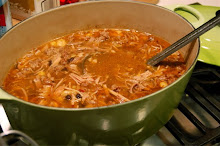
If it's Wednesday, it must be Feijoada

In Brazil, Wednesday is Feijoada day.  No one down there seemed to be able to tell me why - it's just tradition.  And I like that.  Feijoada is a great way to get over the mid-week blues.  But it takes some time to make, so my busy Brazilian colleagues instructed me to make it on Sunday and let it sit.  Like so many rich stews, it only improves sitting a day or two.  A quick reheat on Wednesday and we're good to go.

So often, traditional dishes with peasant roots come in many varieties.  But the basics of black beans and lots of pork and beef, are a foundation. Here I prepare a version heavy with meat, as I had in Brazil many times.  Sorry, Mark Bittman.  I look forward to the challenge of a followup endeavor to develop a lighter version aligned with Mark's "Eat-less-meat-arianism" philosophy, very soon.
1-1/2 lb corned beef, cut into 1-inch pieces
1 lb kielbasa sausage (fresh used here)
1-1/2 lb boneless pork country ribs, cut into 1-inch pieces
1 smoked ham hock
1 lb dried black beans
1/4 lb bacon, diced
1 large sweet onion, diced
1 red chili pepper or jalapeño, diced
4 cloves garlic
2 bay leaves
About 6 cups water
2 navel oranges, peeled, one sliced and one diced

Soak the beans in a large mixing bowl of water all day or the previous night. Drain when ready to use. Preheat oven to 375F.

Heat a bit of canola oil in a very large Dutch oven. Cook the bacon for about 10 minutes and then remove to a bowl. Add the pork to the Dutch oven in two batches, and brown well. Remove to the bowl with the bacon. I also browned the corned beef as well, but it is probably not necessary.
Meanwhile, cook the sausage in about 2 cups water for about 15 minutes.
Slice into 1-inch pieces. If using pre-cooked kielbasa, omit the pre-cooking step. Add the sausage to the Dutch oven and brown. I moved them to one side and added the onions to the other.
When the sausages are browned, remove to the bowl and continue cooking the onions for a total of about 10 minutes, until they are well softened and caramelized a bit. Add the garlic and the red chili (or jalapeño) and cook another 2-3 minutes.
Now return all the meats to the Dutch oven and fold in the beans.
Add enough water just to cover. Add the diced orange and bay leaves and bring to a boil. Stir gently, cover and place Pot in the oven.
Bake for an hour and then give the stew a stir. Continue cooking for about another hour to hour and a half, until all the meats are very tender and the meat falls off the ham hock. When finished cooking, remove the ham hock from the stew and remove the meat from the bone. Discard the bone and any skin (I save the bone for soup!). Return the hock meat to the stew and stir it in.

Your beans should be very soft and the stew should be thickened, but with a sufficient broth. Adjust water if needed and salt and pepper to taste as needed (I found the corned beef did plenty of salting, and none was needed).

Serve over rice with orange slices, cilantro, and ideally a nice sautéed kale, which is traditional.

Serves 8.
Feijoada in Brazil served with rice and traditional fried manioc (cassava or yuca root).

Sunday, March 3, 2013

Beef Prime Rib Roast

We eat a varied diet, so on the rare occasion we eat beef, we want to make it count (and we make it rare).  Grass fed is a great option, especially for ground beef.  And if we are eating a roast, prime rib is my favorite.  There's no magic; just a few simple rules to making a good prime rib.
5-7 lb 3-4 rib beef prime rib roast
6 cloves garlic, cut into long slivers
3 Tbsp rosemary
3 tsp Kosher coarse salt
1/3 cup sherry
2 Tbsp butter

Heat oven to 450F.  With a small, very sharp knife, poke very shallow holes into the fat surface of the roast and slide a sliver of garlic into the slot.  Scatter the garlic evenly about the surface of the roast.  Sprinkle to roast generously with the rosemary and salt.  Insert an oven-going digital thermometer into the center of the roast, away from any bones.

Roast for 30 minutes.  Reduce oven to 375F and continue roasting until the thermometer reads 125F for rare. Remove roast from the oven, leaving the thermometer inserted.  Remove roast to a large cutting board.  Cover with aluminum foil and allow to rest at least 15-20 minutes.  This will allow the juices to re-distribute into the body of the roast. Carving immediately will result in a drained, dry roast - don't even think about it!

Heat juices in roasting pan on the stove to a boil.  Add sherry and bring to a boil, scraping up all the brown bits.  Add the butter and a bit of water if necessary to make a nice jus.
Carve slices at least 1-inch thick.  Serve with horseradish sauce, and the jus on the side.  Serves 4-6. 

And don't waste the ribs on the dog :-)) !!